Featured project
M.ZORGANE Medical Clinic.
Patients request a visit in Arabic or English. Receptionists, doctors and administrators manage the same appointment from their own workspaces.
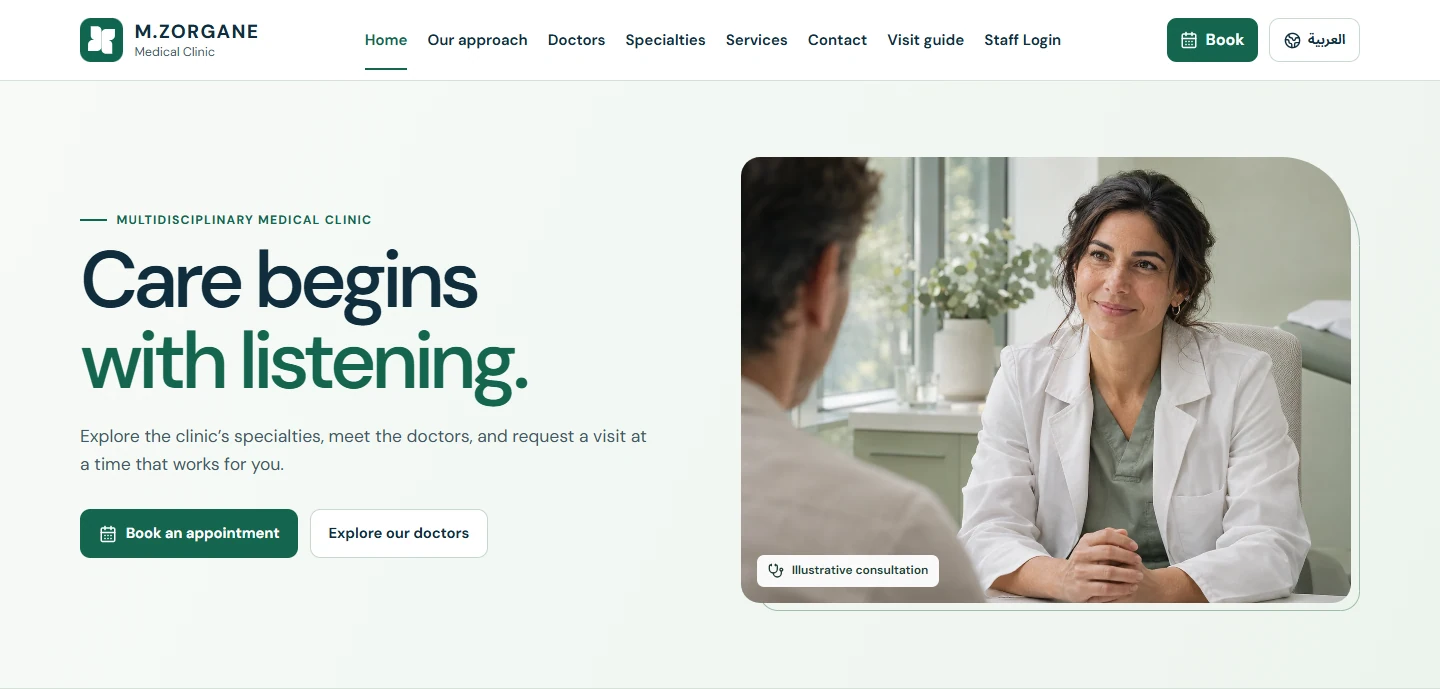
One visit, two sides of the desk
A patient needs to find the right doctor and a time that works. The front desk needs to know who is coming, which requests need a decision and which times are still free. I designed the public website and the staff tools around that shared appointment record.
- Stage
- Self-initiated, working demo
- Project focus
- Product design, application development and database design
- Interface languages
- Arabic (right to left) and English (left to right)
From specialty to a reserved time
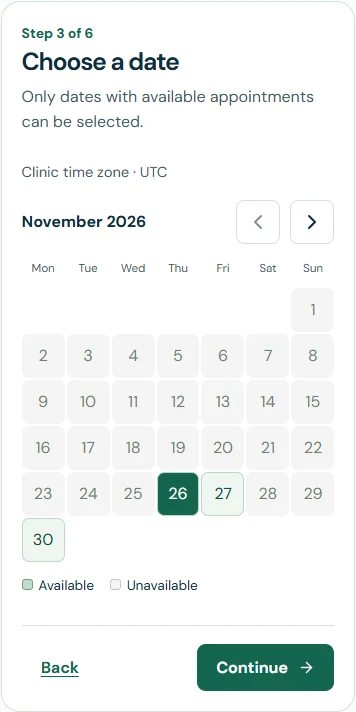
Patients choose a specialty and doctor, pick a date and time, then review their contact details before submitting. The receipt gives them a reference and makes clear that the request is pending.
The calendar uses the clinic’s time zone, the doctor’s working hours and schedule overrides. It shows the same appointment times to a visitor abroad as it does to reception.
Reading direction is part of the layout
Arabic opens right to left, English left to right. Navigation and the booking calendar follow the reading direction, and the booking steps fit a narrow phone screen. Switching language keeps valid specialty and doctor selections.
Inside the clinic
Three workspaces serve different parts of the visit. These captures come from the deployed demo and show synthetic activity.
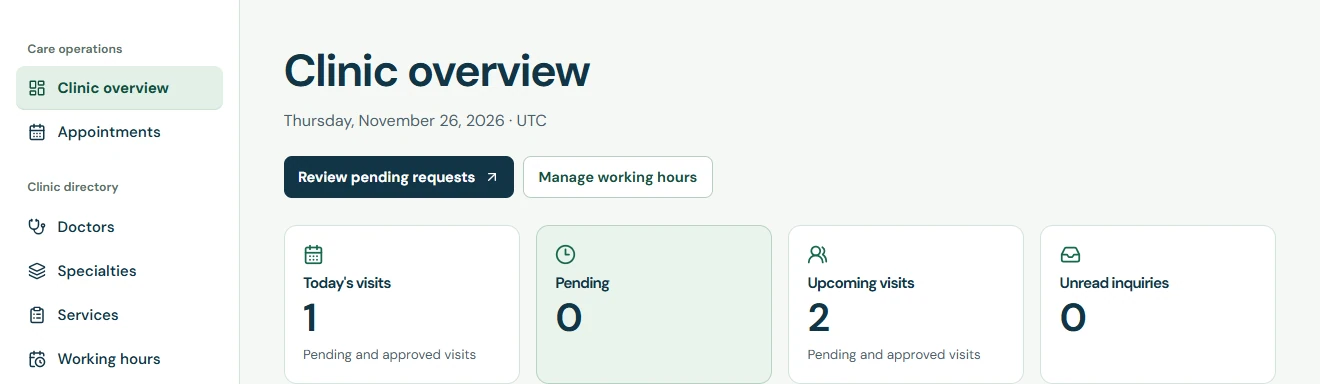
Administrator
The overview links the pending queue to appointment decisions and schedule management. Requests appear oldest first, with their waiting time visible to staff.
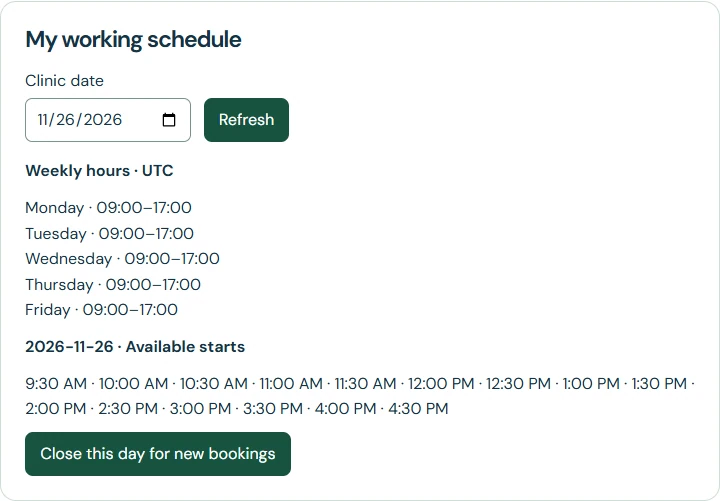
Doctor
Doctors see their assigned visits and can review requests for their own schedule. The schedule view brings weekly hours and available times for one day together.
Receptionist
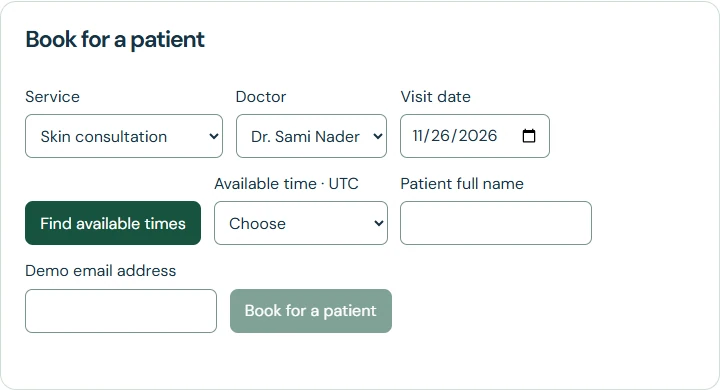
Reception can book on a patient’s behalf, find another slot, check someone in or cancel a visit. The booking form looks up times for the selected service and doctor.
How the pieces fit
The React and TypeScript interface uses Next.js App Router conventions. Vinext builds it for Cloudflare Workers. Supabase Auth verifies staff identities, and PostgreSQL stores schedules, appointments and their status history.
Two requests, one slot
The server rechecks availability on submission. A PostgreSQL exclusion constraint prevents overlapping reservations for the same doctor, even when two requests arrive together. Pending appointments hold their time until a staff decision. Approval keeps the reservation. Rejection or cancellation releases it.
A boundary for every workspace
Server-side checks read each user’s trusted staff membership. Row-level security restricts the records they can access. Public pages can be prerendered, while private dashboard and data responses are independently authorized and marked no-store.
Rendering on a Free Worker
I separated the Admin overview into a small page shell and a request for the live data. In production tests the shell took less CPU time to render, although some data requests still exceeded the Free tier’s 10 ms CPU target.